 India and the UAE are currently served by our service, and we're expanding to the USA.
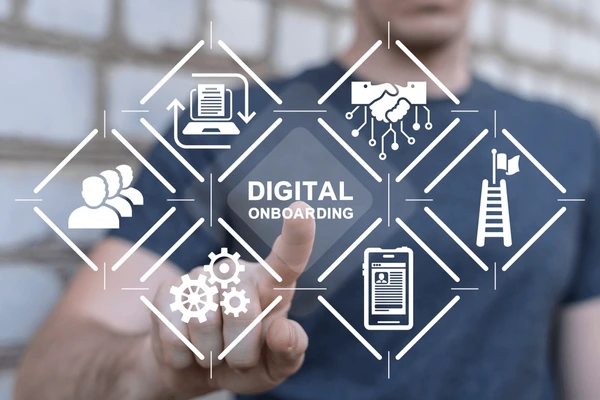

Benefits of Digital Onboarding for Businesses
Implementing Digital Onboarding provides multiple benefits for organizations, including:
Faster Onboarding: Employees can start completing documents and training even before day one.
Consistency: Standardized workflows ensure that every employee receives the same information.
Remote Accessibility: Ideal for hybrid or fully remote teams.
Cost Efficiency: Cuts down on printing, mailing, and HR labor time.
In addition to these benefits, Digital Onboarding contributes to higher retention rates. According to SHRM, a structured onboarding program can improve employee retention by 82% and productivity by over 70%.
How to Implement Digital Onboarding in Your Organization
To successfully roll out Digital Onboarding, start by selecting the right onboarding platform. Look for features such as e-signature integration, task tracking, and interactive learning modules. Some of the most popular tools include BambooHR, WorkBright, and Gusto.
Here’s a simple roadmap:
Define your onboarding goals.
Automate repetitive tasks.
Provide engaging content like videos and quizzes.
Measure employee progress and feedback.
If you’re ready to take the first step, explore our Digital HR solutions (internal link) to learn how we help businesses transform onboarding experiences.

Common Challenges in Digital Onboarding (and How to Overcome Them)
While Digital Onboarding offers many advantages, it’s not without challenges. Some common obstacles include technical glitches, lack of personalization, and low engagement from new hires. To overcome these issues:
Ensure mobile compatibility so new hires can complete onboarding on any device.
Personalize the experience by incorporating welcome videos from team members or tailored training paths.
Provide support channels, such as chatbots or dedicated HR contacts, to help new employees feel supported.
Frequently Asked Questions
What is Digital Onboarding and how does it differ from traditional onboarding?
Digital Onboarding refers to the use of digital tools and technology to streamline the process of welcoming and integrating new employees into an organization. Unlike traditional onboarding, which relies heavily on paper documents and in-person meetings, Digital Onboarding automates tasks like filling out forms, delivering training, and collecting compliance documents. It allows for a more efficient, engaging, and remote-friendly experience for both HR teams and new hires.
What are the essential tools needed for successful Digital Onboarding?
To successfully implement Digital Onboarding, organizations typically use: Onboarding platforms (e.g., BambooHR, Gusto, WorkBright) E-signature tools (e.g., DocuSign, Adobe Sign) Learning Management Systems (LMS) for training modules Task automation tools to schedule reminders and progress tracking Communication tools (e.g., Slack, Microsoft Teams) to keep new hires connected
How can companies ensure a personalized experience during Digital Onboarding?
Even though Digital Onboarding is automated, it can still be highly personalized. Companies can: Send personalized welcome videos from team members or leadership Customize onboarding workflows based on role, location, or department Assign mentors or buddies digitally to guide new hires Include company culture content, such as virtual office tours or employee testimonials
Traditional onboarding and Digital Onboarding
Compared to traditional onboarding, Digital Onboarding offers a faster, more efficient, and scalable approach to welcoming new employees. Traditional onboarding often involves in-person meetings, physical paperwork, and manual processes that can be time-consuming and prone to errors. In contrast, Digital Onboarding automates administrative tasks like form submissions, document signing, and training delivery through digital platforms. This not only saves valuable time for HR teams but also provides a more consistent and engaging experience for new hires—especially in remote or hybrid work environments. Additionally, Digital Onboarding enables real-time tracking, analytics, and personalized workflows, making it a more data-driven and employee-friendly solution for modern businesses.